
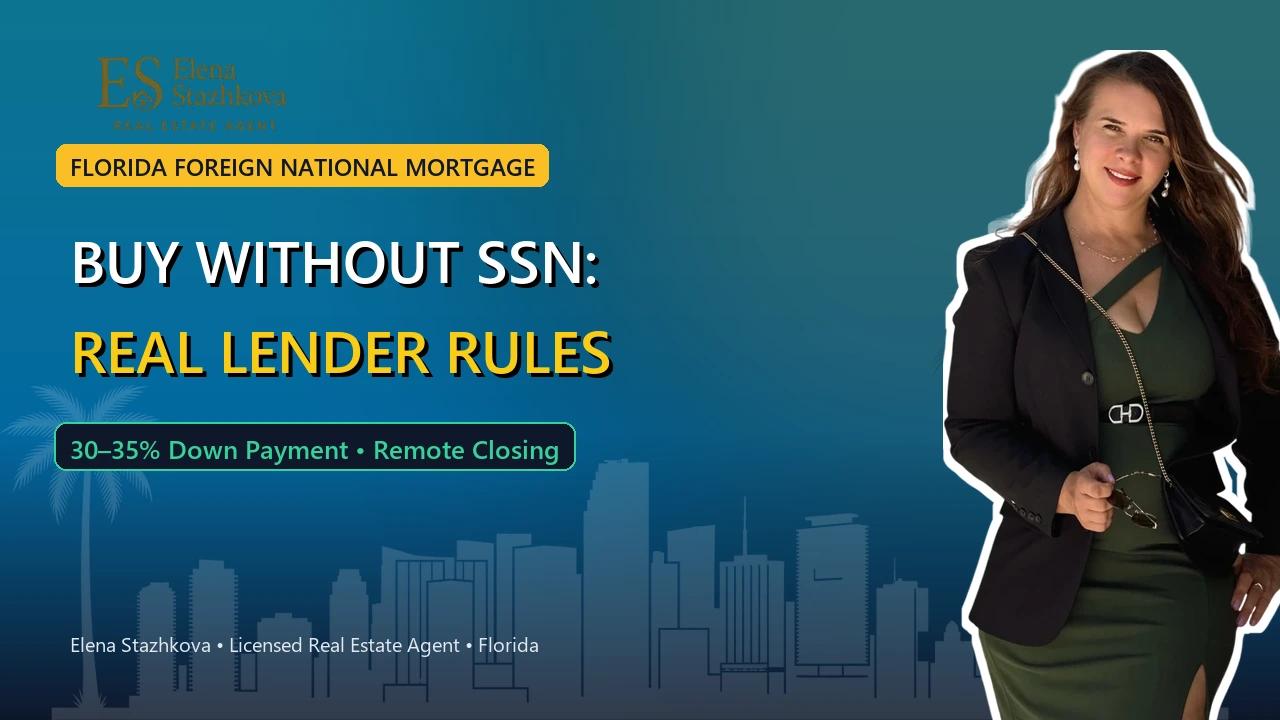
Foreign National Mortgage in Florida: How to Buy Without US Credit or SSN
Hello. International clients frequently ask me: “Can I buy a home or condo in Miami and South Florida with financing if I don't have US citizenship, a Green Card, a US Social Security Number (SSN), or an American credit score?” The answer is an unequivocal yes. Every year, thousands of foreign nationals successfully finance real estate in Florida. In this guide, I will walk you through how Foreign National Mortgages work, the real requirements lenders impose, and how to prepare for a smooth transaction.
1. How the Foreign National Loan Program Works (Non-QM)
In the United States, standard conforming loans (Fannie Mae and Freddie Mac) require a US Social Security Number and a two-year domestic credit history. For non-residents, specialized portfolio lenders and Florida private banks offer Non-QM loans (Non-Qualified Mortgages). Instead of looking for a US FICO score, the lender evaluates your international banking standing, liquid assets, income stability, and the collateral value of the property.
2. Key Financial Terms and Figures
Here are the real market benchmarks every international buyer should know:
- Down Payment (LTV): Typically 30% to 35% of the property value (a Loan-to-Value ratio of 65% to 70%). For certain high-density investor condominiums or condo-hotels, down payments may require 40%.
- Loan Structure: Standard 30-year fixed-rate mortgages or Adjustable Rate Mortgages (such as 5/1 or 7/1 ARM), where your interest rate remains locked for the initial 5 or 7 years.
- Interest Rates: Usually 1.0% to 1.5% above domestic prime conforming rates, reflecting the non-conforming portfolio nature of the loan.
- Reserve Requirements: Lenders require verified liquid reserves equal to 6 to 12 months of PITI payments (Principal, Interest, Taxes, and Insurance). These funds remain in your bank account post-closing.
3. Document Checklist: What Lenders Actually Require
Contrary to popular belief, the paperwork required for a foreign national loan is streamlined and practical:
- Valid Foreign Passport and US Visa: A valid passport along with a US entry visa (B1/B2, ESTA/Visa Waiver) or proof of legal foreign status. Some lenders permit closing even without a US visa if signed abroad.
- Bank Reference Letter: An official letter on bank letterhead from your primary financial institution in your home country stating you have maintained an account in good standing for at least two consecutive years.
- Bank Statements: Two to three months of recent bank statements showing funds for down payment, closing costs (typically 2% to 3%), and required reserves.
- CPA / Accountant Income Verification Letter: A signed letter from a certified public accountant or licensed auditor in your home country confirming your annual income for the past two years plus current year-to-date income.
- Proof of Foreign Residence: A recent utility bill (water, electric, or gas) from within the last 60 days reflecting your legal name and primary foreign residential address.
4. Can You Close Remotely Without Flying to Florida?
Yes. Florida law allows remote closings through Remote Online Notarization (RON) with licensed Florida title companies. Alternatively, you can execute loan documents at a US Embassy or Consulate abroad, or appoint a trusted representative via a specific Power of Attorney (POA) approved in advance by the lender and title insurer.
5. Critical Considerations for Florida Condos
When financing a condominium in Miami or Sunny Isles Beach, the lender reviews the building's financial health via a Condo Questionnaire. Under Florida legislation (Senate Bill 4-D), buildings over 25–30 years old must complete structural Milestone Inspections and fund Structural Integrity Reserve Studies (SIRS). Working with an experienced local realtor ensures you select a warrantable or lender-approved condo building without unpleasant surprises.
6. US Tax Considerations: ITIN and FIRPTA
You do not need an ITIN (Individual Taxpayer Identification Number) to submit an offer or obtain loan pre-approval. However, if you rent out the property for investment income, you will apply for an ITIN to file annual tax returns with the IRS. Additionally, when you eventually sell the property in the future, the Foreign Investment in Real Property Tax Act (FIRPTA) guidelines will apply.
Conclusion and Next Steps
Purchasing real estate in South Florida with a foreign national mortgage is a transparent, predictable, and proven process. As your first step, I always recommend obtaining a formal Pre-Qualification Letter from a specialized Florida mortgage broker. Reach out to me directly, and I will connect you with top-tier international lending partners and guide you every step of the way.
Questions about this topic?
Connect with Elena for a personalized consultation or tailored property search.